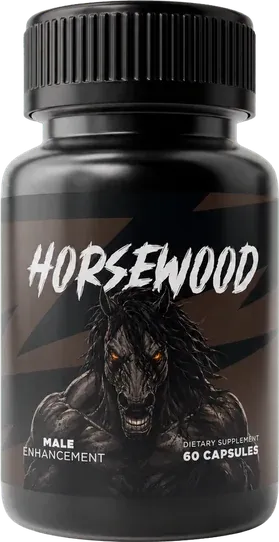
Horsewood Guides: Sexual Health, Label Reading and Research
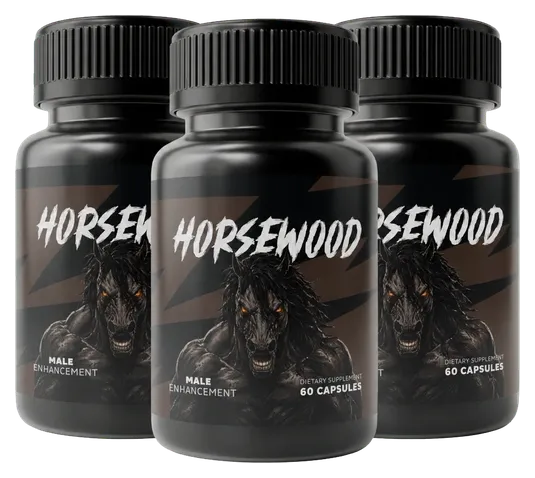
Written by the Horsewood Formula editorial desk
Last updated · Who reviewed this page · How we write and review
The Horsewood guides cover two topics: men's sexual health, including why ED can signal heart disease, and how to read a men's supplement label. Three blog posts look at horny goat weed and icariin, boron and testosterone, and hidden drugs in sex supplements. A glossary explains ten label terms.
Horsewood guides: two in-depth reads
The Horsewood guides cover men's sexual health and how to read a men's supplement label. Both are free, dated and sourced.
Read the health guide if you have a symptom. Read the label guide if you are comparing bottles. The photos on the cards are stock images, not customers.
Men's Sexual Health Guide: Causes, Heart Links and Treatment
What shapes erections and desire, why ED can point to heart disease, how to raise it with a doctor, and where supplements fit.
How to Read a Men's Supplement Label: A Buyer's Checklist
Serving size, extract ratios, elemental minerals, plant parts and claim wording, with the checklist run on Horsewood.
Horsewood blog: three focused posts
Each Horsewood blog post answers one question in depth. Two look at single ingredients on the label, and one looks at a safety problem across the whole category.
Every post names the dose a study used, so you can set it beside the label yourself.
Horny Goat Weed and Icariin: What Human Studies Tested
The small trials behind epimedium, the doses on sale, and why rat studies say little about people.
Boron and Testosterone: What the Studies Used
The eight-man boron study, elemental weight, and the adult upper limit of 20 mg a day.
Hidden Drugs in Sexual Enhancement Supplements
What FDA keeps finding, why it is dangerous with nitrates, and how to protect yourself.
New posts appear on the blog page.
Which Horsewood guide answers your question?
Match your question to one read. Most men need only one or two of them.
| If you are asking | Start here | Why |
|---|---|---|
| Is my ED a sign of something else? | Men's sexual health guide | ED can be an early warning of heart disease |
| Which label is stronger? | Label guide | It shows how to compare extract with extract |
| Does horny goat weed have human trials? | Horny goat weed post | Trials are small and doses vary |
| Is 20 mg of boron a lot? | Boron post | The label gives chelate weight, not elemental |
| Could a sex pill hide a drug? | Hidden drugs post | FDA has found undeclared drugs in many |
| What does the bottle actually say? | Supplement facts page | Every line on the panel, explained |
How to work through the Horsewood guides
Read in this order and you will cover health first, the label second and the product last. Each step takes one sitting.
- 1
Check your health first
Read the sexual health guide and note any symptom worth a doctor visit.
- 2
Learn the label
Use the label guide to read serving size, ratios and plant parts on any bottle.
- 3
Look up one ingredient
Pick the blog post on the ingredient you most want to understand.
- 4
Rule out hidden drugs
Read the hidden drugs post before you buy any sexual-enhancement product.
Horsewood label terms in plain English
Ten words do most of the work on a men's supplement label. The right column shows where each one appears on the Horsewood bottle.
NIH notes that a mineral label should state the elemental amount (NIH ODS, 2022). That one term explains the biggest gap on this label.
| Term | What it means | On the Horsewood label |
|---|---|---|
| Serving size | How many capsules count as one dose on the panel. | 2 capsules; 30 servings per bottle |
| Extract ratio | How much raw plant went into each unit of extract. | Tongkat ali 100:1; horny goat weed 10:1 |
| Dry powder equivalent | The raw-plant weight behind an extract, not the weight you swallow. | About 1,000 mg tongkat ali; about 80 mg horny goat weed |
| Chelate | A mineral bound to another molecule, often an amino acid. | Boron amino acid chelate, 20 mg |
| Elemental weight | The weight of the mineral alone, without its carrier. | Not stated for boron |
| Plant part | Which part of the plant the extract comes from. | Saw palmetto berry, wild yam root, nettle leaf |
| Dagger (†) | No Daily Value has been set for that line. | Beside all seven lines |
| Other ingredients | Fillers, flow agents and the capsule shell. | Microcrystalline cellulose, gelatin, magnesium stearate |
| Distributed for | The company a product is made for, which may not be the maker. | Horsewood, Largo, FL |
| Label revision | A code that marks which version of the artwork is printed. | REV 11/25 |
How do the Horsewood guides weigh evidence?
The Horsewood guides rank a source by how it was tested, not by how loudly it is cited. A pooled review of trials counts for more than one small study without a placebo group.
Here is the ladder the guides use, from strongest to weakest.
Systematic review
Pools many trials. One tongkat ali review pooled five trials with 232 men (Leisegang et al., 2022).
Randomized trial
Compares a product with placebo. One tongkat ali trial ran 12 weeks in 105 older men (Chinnappan et al., 2021).
Pilot study
Small and often without placebo. One ran 5 weeks in 25 active seniors (Henkel et al., 2014).
Case report
One person's reaction. Useful for safety signals, as with horny goat weed and heart rhythm (Drugs.com, 2026).
Lab and animal work
Shows a possible mechanism. It cannot tell you what a capsule does in a person.
Marketing claim
A sales line with no study behind it. The guides quote these only to explain them.
What the Horsewood guides found, in four numbers
The guides compare the Horsewood label with the doses human studies used. Four numbers sum up what they found.
None of them makes the capsule unsafe. They mean the study results cannot be borrowed to predict a result from it.

The tongkat ali gap comes from a pooled review of trials that used 100 to 600 mg of extract a day (Leisegang et al., 2022). The saw palmetto gap comes from a trial that tested 320 to 960 mg a day (Andriole et al., 2013).
The ingredients page sets every line beside its research dose.
What the Horsewood guides will not tell you
The Horsewood guides stick to what the sources support. Some promises never appear, however often people search for them.
- That a supplement treats ED, low testosterone or a prostate problem
- That any capsule adds size or stamina
- That the label's 1,000 mg tongkat figure is the dose you swallow
- A results timeline the seller never published
- A doctor's name, a review or a rating that has not been verified
Who writes and checks the Horsewood guides?
The Horsewood Formula editorial desk writes every guide and blog post. It works from the bottle label, linked studies and government health pages.
Each guide also has a slot for our medical reviewer. That slot shows a marked blank until a named, qualified person has checked the guide.
Questions about the Horsewood guides
Common search questions, answered from the label and the sources cited on this page.
Are the Horsewood guides free to read?
Yes. Both guides and all three blog posts are free. There is no email box to fill in, no login and no paywall.
Which Horsewood guide should I read first?
Start with the men's sexual health guide if you have a symptom, such as trouble with erections. Start with the label guide if you only want to compare products.
Do the Horsewood guides say the capsule works?
No. They describe studies of single ingredients, not of the finished formula. They also show how far each amount on the label sits from the doses those studies used.
Can a Horsewood guide replace a visit to my doctor?
No. The guides explain public research in plain words. Questions about your own body, tests or medicines belong with a clinician who knows you.
What kind of sources do the Horsewood guides use?
They lean on systematic reviews, randomized trials and pages from NIH, NCCIH, FDA and the FTC. Each research line names the dose and links the source.
What is the difference between a guide and a blog post here?
A guide covers a broad topic from start to finish. A blog post answers one narrow question, such as what dose of boron a study used.
Why do the Horsewood guides point out problems with the product?
A careful reader needs the gaps as much as the facts. Low amounts, a missing lab report and conflicting ads all affect whether a purchase makes sense.
Do the Horsewood guides cover hidden drugs in sex supplements?
Yes. The hidden drugs post explains what FDA has found in sexual-enhancement products sold as supplements and why that matters with heart medicines.
How are the Horsewood guides kept current?
Near the top, each guide shows a Last updated date. The latest full source check finished on October 13, 2026.