01Berry extract
Saw Palmetto
20 mg
Serenoa repens berry extract
What studies used
320-960 mg a day for 72 weeks
Even full and triple doses did no better than placebo for urinary symptoms. (Andriole et al., 2013)
USA Authorized Retailer2 capsules a day · 60 per bottle
60-day money-back guaranteeSix bottles ship free within the U.S.
Written by the Horsewood Formula editorial desk
Last updated · Who reviewed this page · How we write and review
Two Horsewood capsules give you seven listed ingredients, 118 mg in total.
Five weigh 20 mg each. Tongkat ali is 10 mg of a 100:1 extract and horny goat weed is 8 mg of a 10:1 extract.
To see what each one is meant to do, read how Horsewood works.
The Horsewood label lists seven active ingredients in every 2-capsule serving, for a total of 118 mg. Five weigh 20 mg each, tongkat ali weighs 10 mg and horny goat weed weighs 8 mg.
Each card shows the label amount. Turn it over to see the dose human studies used.
20 mg
Serenoa repens berry extract
What studies used
320-960 mg a day for 72 weeks
Even full and triple doses did no better than placebo for urinary symptoms. (Andriole et al., 2013)
20 mg
Dioscorea villosa root extract
What studies used
No established dose
The body does not turn wild yam into DHEA or testosterone. (MSKCC, 2022)
20 mg
Smilax ornata root extract
What studies used
Not enough science to set a dose
No good human studies; it does not turn into steroids. (RxList, n.d.)
20 mg
Urtica dioica leaf extract
What studies used
Root extract, 429 mg a day, in prostate trials
The label uses leaf, not the root studied for the prostate. (NIDDK LiverTox, 2023)
20 mg
Boron amino acid chelate (elemental boron not stated)
What studies used
10 mg elemental boron a day, 1 week, 8 men
The label gives the chelate weight; elemental boron is not stated. (Naghii et al., 2011)
10 mg
Eurycoma longifolia, 100:1 extract (label: equal to about 1,000 mg dry powder)
What studies used
100-600 mg a day of extract
10 mg of extract is 10 to 60 times less than the studied extracts. (Leisegang et al., 2022)
8 mg
Epimedium sagittatum, 10:1 extract (label: equal to about 80 mg dry powder)
What studies used
No clinical basis for a dose
Commercial products run 250-500 mg; icariin content is not stated here. (Drugs.com, 2026)
The full panel, with the other ingredients and the small print, is on the Horsewood Supplement Facts page.
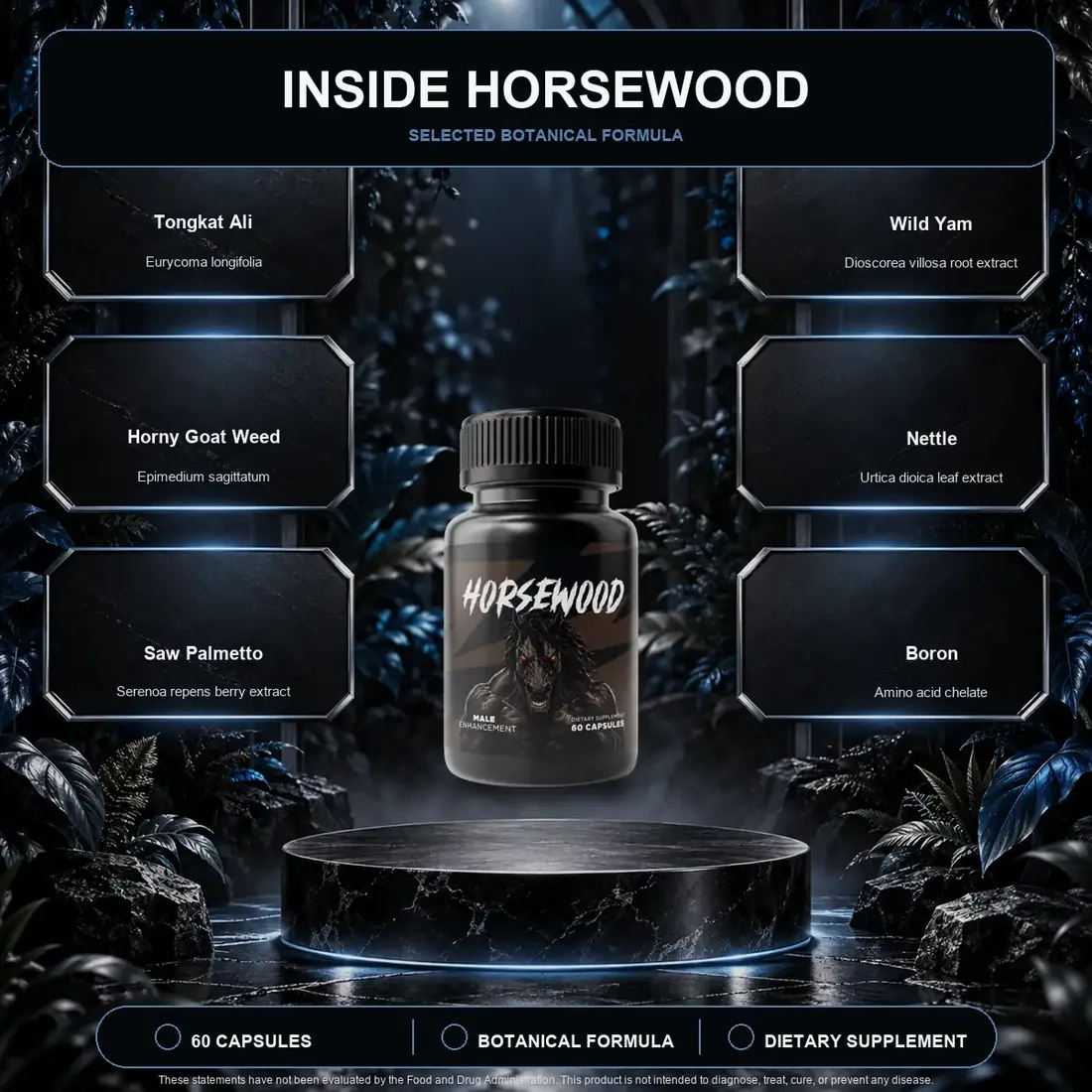
The seller’s “Inside Horsewood” graphic shows six ingredient boxes and leaves out sarsaparilla. The seller’s product pack also lists six.
The bottle label lists seven, with sarsaparilla root extract at 20 mg. When the two disagree, the label wins.
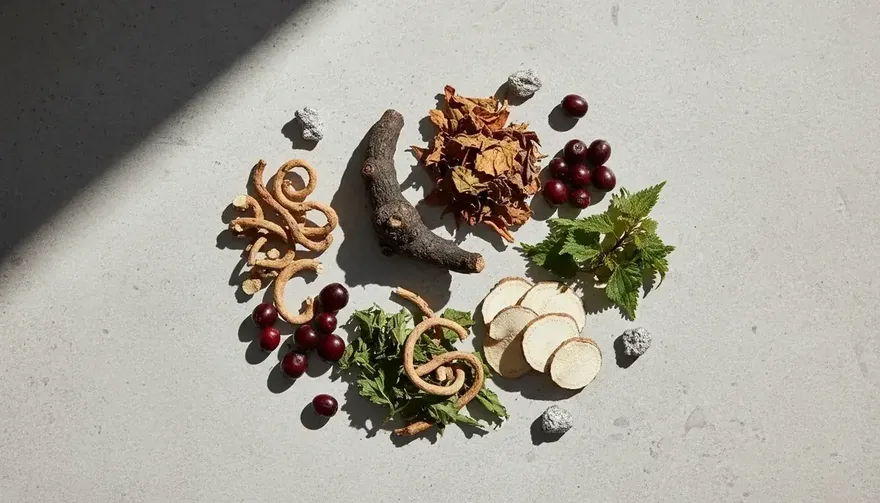
The Horsewood label names a plant part or extract type for every line. Saw palmetto is the berry, wild yam and sarsaparilla are roots, and nettle is the leaf.
Tongkat ali and horny goat weed are concentrated extracts with a ratio. Boron is a mineral bound to an amino acid, called a chelate.
| Ingredient | Latin name or form | Part or type | Per serving |
|---|---|---|---|
| Saw palmetto | Serenoa repens | Berry extract | 20 mg |
| Wild yam | Dioscorea villosa | Root extract | 20 mg |
| Sarsaparilla | Smilax ornata | Root extract | 20 mg |
| Nettle | Urtica dioica | Leaf extract | 20 mg |
| Boron | Amino acid chelate | Mineral compound | 20 mg (compound weight) |
| Tongkat ali | Eurycoma longifolia | 100:1 extract | 10 mg |
| Horny goat weed | Epimedium sagittatum | 10:1 extract | 8 mg |
Horsewood contains 10 mg of tongkat ali extract per serving. The label adds that this equals about 1,000 mg of dry tongkat ali powder.
The 1,000 mg describes the raw root used to make the extract. A 100:1 ratio means about 100 parts of root became 1 part of extract.
Trials used 100 to 600 mg of extract a day (Leisegang et al., 2022), so the fair comparison is 10 mg against those numbers. What the extract is standardized to is not published.
Horsewood uses boron amino acid chelate at 20 mg per serving. That number is the weight of the whole compound, not of the boron inside it.
NIH says boron labels should list elemental boron (NIH ODS, 2022). The Horsewood label does not, so the elemental amount is unknown but lower than 20 mg.
Far. Every printed Horsewood amount sits well below the doses used in human studies of the same ingredient. The meter shows each gap on a log scale, where each step to the right is ten times more.
Boron has no dot because the elemental amount is not printed.
Compare extract to extract: 10 mg against 100-600 mg. The label figure of 1,000 mg is a ratio conversion. Sources: (Leisegang et al., 2022) (Chinnappan et al., 2021)
20 mg is one sixteenth of the usual 320 mg dose, and even full doses did not beat placebo for urinary symptoms. Sources: (Andriole et al., 2013) (Franco et al., 2023)
The label uses nettle leaf; prostate studies used the root, at about 15 to 30 times this amount. Sources: (NIDDK LiverTox, 2023)
The 20 mg is the chelate compound, so the elemental boron is lower and not stated. For adults, the upper limit is 20 mg of elemental boron. Sources: (Naghii et al., 2011) (NIH ODS, 2022)
No clinical dose exists. That 8 mg is far below what is commonly sold. Sources: (Drugs.com, 2026) (NIDDK LiverTox, 2022)
Horsewood amount dose range used in human studies (log scale)
Horsewood lists Epimedium sagittatum, one of the species sold as horny goat weed. The label gives 8 mg of a 10:1 extract, said to equal about 80 mg of dry powder.
Icariin is the compound most often linked to this plant. The label does not say how much icariin the extract holds.
No clinical study sets a dose. Commercial products usually sell 250 to 500 mg (Drugs.com, 2026), and sexual benefits are unproven in rigorous trials (NIDDK LiverTox, 2022).
Yes, three Horsewood ingredients have safety notes worth knowing, even at small amounts.
The full list of possible reactions is on the Horsewood side effects page.
May raise bleeding risk with blood thinners and around surgery (MSKCC, 2023).
Case reports describe fast heart rhythm, mostly in older people with heart disease (Drugs.com, 2026).
Some products have tested positive for lead, mercury or hidden sildenafil (OPSS (DoD), 2023).
Hold the bottle and read the Supplement Facts panel; it takes about a minute. Four checks cover every Horsewood line.
It should read Serving Size: 2 capsules, 30 servings.
Saw palmetto first, horny goat weed last, sarsaparilla third.
Tongkat ali shows 100:1 and horny goat weed shows 10:1.
Microcrystalline cellulose, gelatin and magnesium stearate.
Want to know how the seven are meant to fit together? Read how Horsewood is meant to work, then see who Horsewood suits.
Common search questions, answered from the label and the sources cited on this page.
Six plants and one mineral: saw palmetto berry, wild yam root, sarsaparilla root, nettle leaf, tongkat ali and horny goat weed, plus boron amino acid chelate. Together they weigh 118 mg per 2-capsule serving.
Each 2-capsule serving holds 10 mg of a 100:1 tongkat ali extract. The label says that equals about 1,000 mg of dry root powder, but the capsules contain 10 mg.
The label names Epimedium sagittatum, a species sold as horny goat weed. It is 8 mg of a 10:1 extract, and no icariin percentage is printed.
Smilax ornata is sarsaparilla root. There is not enough evidence to rate it for any use, and the old claim that it turns into anabolic steroids is false (RxList, n.d.).
Dioscorea villosa is wild yam root. It is often linked to hormones, but there is no evidence the body turns it into DHEA, progesterone or testosterone (MSKCC, 2022).
Boron amino acid chelate, 20 mg per serving. That is the weight of the whole compound, so the amount of elemental boron is lower and is not printed.
The label does not explain the choice. Most prostate research on nettle used the root, not the leaf, at around 300 to 600 mg a day (NIDDK LiverTox, 2023).
Tongkat ali has the most human trials pointing toward a benefit, a small rise in testosterone, but at 100 to 600 mg of extract a day (Leisegang et al., 2022). Saw palmetto has more trials, yet they show little or no benefit for urinary symptoms (Franco et al., 2023).
No. Neither appears on the label. The seven active lines and the three other ingredients are the full list printed on the bottle.