Horsewood Testing and Quality: What Is and Is Not Published
Written by the Horsewood Formula editorial desk
Last updated · Who reviewed this page · How we write and review
The Horsewood label says Manufactured in an FDA registered facility and Assembled in the USA, but names no factory or lab. Registration describes a building, not an approval: FDA does not approve supplements or issue registration certificates. No lab report, hidden-drug screen or USP or NSF seal is published, and the lot and CoA codes are draft labels.
What quality claims does the Horsewood label make?
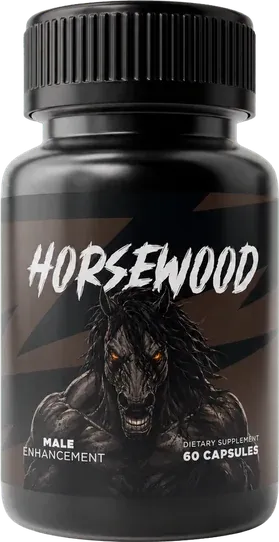
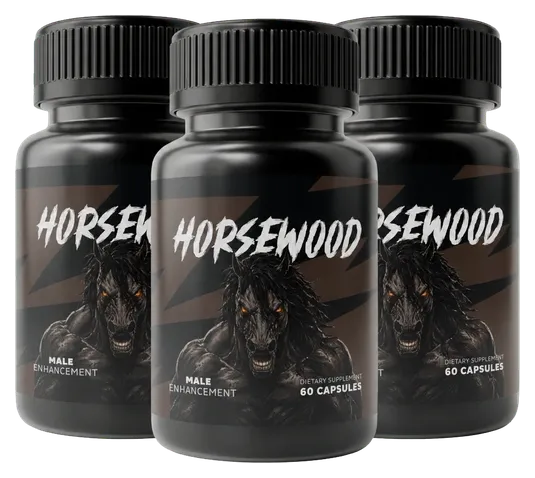
The Horsewood label makes two quality-related statements: “Manufactured in an FDA registered facility” and “Assembled in the USA.” Seller graphics add an FDA facility badge and a money-back seal.
None of these is a test of the capsules. The table shows what each one does and does not tell you.
 FDA facility badge: describes the factory, not the formula
 Money-back seal: the 60-day window, not a quality test
| Claim or badge | Where it appears | What it does not tell you |
|---|---|---|
| Manufactured in an FDA registered facility | Label | Which factory, or whether FDA reviewed the formula |
| Assembled in the USA | Label | Where each herb was grown or extracted |
| Made in USA | Sales site only | The label uses the narrower word assembled |
| FDA facility badge | Seller graphic | Any approval of the product |
| Money-back seal | Seller graphic | Anything about purity or contents |
Does “FDA registered facility” mean Horsewood is FDA approved?
No. Horsewood is not FDA approved, and no dietary supplement is. FDA does not have the authority to approve supplements for safety or effectiveness before they are sold (FDA, 2022).
Registration means a factory is listed with FDA. Under a 1994 law, supplements are regulated as a special kind of food, not as drugs (FDA, 2015).
| Phrase | What it means |
|---|---|
| FDA registered facility | The factory is listed with FDA |
| FDA approved | Not possible for a dietary supplement |
| FDA certified | FDA issues no such certificate for facilities |
| Dietary Supplement | Regulated as a food category, not a drug |
What is cGMP, and does the Horsewood label claim it?
Current Good Manufacturing Practice, or cGMP, is the set of FDA rules supplement makers must follow for clean, consistent production. The Horsewood label does not print a GMP statement or a certifier.
These rules cover areas such as staff training, clean equipment, ingredient identity checks and batch records. They apply to every supplement maker, whether a label mentions them or not.
Questions worth asking about any factory claim
- Which company made this batch?
- Which outside body audits that factory, and when was the last audit?
- Is a batch record or CoA available for my lot?
- Was the batch screened for heavy metals and undeclared drugs?
None of these answers is published for this product. The order desk is the place to ask.
What testing records does Horsewood publish?
Horsewood publishes its full Supplement Facts and nothing beyond the label. No independent lab report has been released, and the lot HOR-26/HO-1466 and CoA HOR-1466-26-HO are draft labels, not lab proof.
So no one outside the seller has shown, in public, that each capsule holds what the label states.
| Quality record | Status on October 13, 2026 |
|---|---|
| Supplement Facts label | Published |
| FDA registered facility line | On the label |
| Manufacturer name | Not published |
| Independent lab report | Not published |
| Hidden-drug screen | Not published |
| Elemental boron amount | Not published |
| Icariin content | Not published |
| Study of the finished formula | Not published |
The batch-verify page shows how to compare these codes with your own bottle.
What would a Horsewood certificate of analysis need to show?
A useful Horsewood certificate of analysis would name the lab, the lot and the test date, then report identity, strength and contaminants. Without those items, a CoA code is only a reference number.
Contaminants matter for one ingredient in particular. Some tongkat ali products have been found with lead, mercury or hidden sildenafil (OPSS (DoD), 2023), and product strength and purity are not standardized (NIDDK LiverTox, 2024).
Identity
Confirms each of the seven ingredients is the stated plant or mineral.
Strength
Measures amounts against the label, such as the 10 mg of tongkat ali.
Heavy metals
Screens for lead, mercury, arsenic and cadmium.
Microbes
Checks for bacteria, yeast and mold.
Undeclared drugs
Screens for sildenafil, tadalafil and similar drugs.
Lab and lot
Names the lab, the batch tested and the test date.
Does Horsewood carry a USP, NSF or ConsumerLab seal?
No. The Horsewood label shows no USP, NSF or ConsumerLab seal. Those groups test products and let passing ones display their mark.
Such seals check label accuracy and purity, but they do not prove a product is safe or that it works (NIH ODS, 2023). A missing seal means no outside group has publicly checked this product.
| Seal type | Who checks | On Horsewood? |
|---|---|---|
| USP Verified | An independent standards group | No |
| NSF Certified | An independent testing group | No |
| ConsumerLab | An independent testing company | No |
| FDA facility badge | No outside checker named | Seller graphic only |
What does the FDA statement on the Horsewood label mean?
The FDA statement says the label claims have not been evaluated by FDA and that Horsewood is not meant to diagnose, treat, cure or prevent any disease. It is required wording, not a warning about this product alone.
Claims about body function are not pre-approved, must be truthful and must carry that disclaimer (FDA, 2024). The sales-page claims, such as “Natural support for libido & desire,” fall under that rule.
So Horsewood is not a treatment for erectile dysfunction, low testosterone or any prostate condition. The supplement facts page reads the full panel line by line.
How can you check Horsewood quality yourself?
You can check three things at home: the source, the label and the seal. A lab test is the one check you cannot do yourself.
Use these boxes when the parcel arrives, then put the listed questions to the order desk.
Buy from the USA Authorized Retailer. Keep the confirmation email and order ID.
Seven lines, 118 mg per 2 capsules, Largo, Florida distributor, REV 11/25.
Do not use the bottle if the seal is damaged or missing.
Questions to ask the Horsewood order desk: 0 of 5 checked
The ingredients page compares each amount with the doses used in research.
Horsewood testing and quality: common questions
Common search questions, answered from the label and the sources cited on this page.
Who tests Horsewood for purity?
No testing lab has been named. The seller's materials carry a draft CoA label, HOR-1466-26-HO, but no lab report stands behind it.
Does Horsewood publish lab results?
No. As of the last update, no independent lab report, purity test or hidden-drug screen has been published for any batch.
What is a certificate of analysis for supplements?
A certificate of analysis, or CoA, is a lab document for one batch. It usually reports identity, strength and contaminant results, with the lab's name, the lot number and a test date.
What do USP, NSF and ConsumerLab seals mean?
They show that an outside group checked a product, mainly for label accuracy and purity. NIH notes that such seals do not prove a product is safe or that it works. Horsewood carries none of them.
Are herbal extracts tested for lead and mercury?
Only when a maker or an outside lab chooses to test them, and results are not always shared. Some tongkat ali products have been found with lead or mercury, which is why a published CoA matters.
What is cGMP for dietary supplements?
Current Good Manufacturing Practice, or cGMP, is the set of FDA rules supplement makers must follow for clean, consistent production and records. The rules apply whether or not a label mentions them.
Does FDA inspect supplement factories?
FDA can inspect facilities that make supplements, but it does not approve products before sale. A registered facility is not the same as an approved product.
Does FDA issue registration certificates?
No. FDA neither issues certificates of registration nor recognizes registration certificates sold by private companies.
Who manufactures Horsewood?
The manufacturer's name is not published. The label says Distributed for Horsewood in Largo, Florida, Assembled in the USA, and Manufactured in an FDA registered facility.
Has the finished Horsewood formula been studied?
Nobody has published a clinical study of the finished formula. Research on its ingredients tested single herbs, usually at much higher doses.